Understanding Culture Dilution in Megacities
Culture Dilution represents a significant challenge within the world's megacities, the vast urban centers defining much of the 21st-century lived experience.
It is the process by which unique cultural characteristics, identities, traditions, local crafts, languages, and social practices gradually erode or disappear
within these densely populated, rapidly evolving environments. While often presented as natural progress or economic necessity, this dilution is frequently
enabled or actively driven by specific governmental and corporate intentions, prioritizing economic growth and standardized experiences over the preservation
of distinct heritage and community character. Understanding these actors and their roles is crucial for fostering resilient cultural identities in the modern
urban landscape.
Megacities, with populations exceeding 10 million, are crucibles of culture, identity, and history. However, the relentless forces of globalization, rapid
development, and shifting economic priorities are increasingly leading to a phenomenon known as Culture Dilution. This refers to the gradual erosion and
homogenization of unique cultural identities, traditions, local crafts, languages, and social practices within these vast urban landscapes. While cultural
exchange can be enriching, the dilution aspect strips away the unique layers that define a place and its people. This document explores the mechanisms and
motivations behind this cultural erosion, highlighting how policies and market-driven strategies often prioritize economic gains over heritage conservation.
Governments, at federal, state, and local levels, hold significant power in shaping urban landscapes and regulating development. Certain policies and
priorities actively facilitate culture dilution, often with the stated goals of economic revitalization or efficiency. Urban renewal and economic development
initiatives, for instance, can involve clearing-under policies and tax incentives favoring large-scale, generic development over community character
preservation. Zoning and land use regulations sometimes allow incompatible uses or encourage high-density development that overwhelms infrastructure and
community services. Infrastructure projects can bisect historic neighborhoods, severing community ties and destroying built heritage. Furthermore, government
funding for cultural preservation and the arts often lags behind investments in infrastructure or public safety, leaving local initiatives vulnerable.
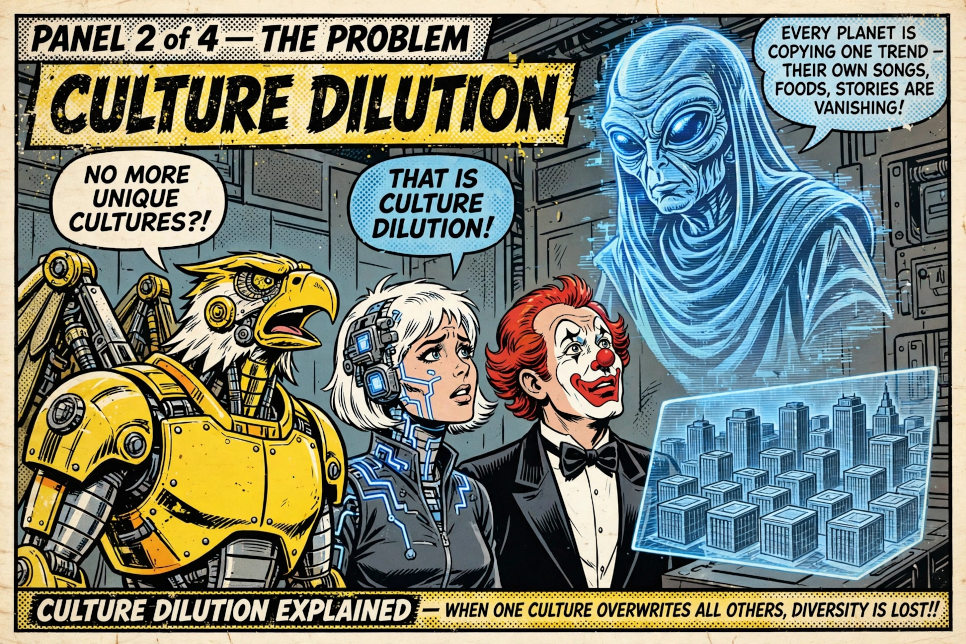
Corporations, driven by the imperative for profit and market expansion, are powerful agents of change in megacities. Their influence often directly shapes the physical and cultural landscape through globalization. The relentless expansion of global retail and service franchises like McDonald's, Walmart, Amazon Go, and Starbucks displaces smaller, local businesses crucial to neighborhood identity and local economies, promoting standardized products and experiences. Real estate developers focus on creating high-value properties in "lifestyle" zones, often bulldozing historic districts and erasing community history, prioritizing generic luxury housing designed for rentability. Advertising and media promote standardized lifestyles and consumption patterns, homogenizing aspirations. The rise of the platform economy can also weaken local economies dependent on foot traffic.
The human cost and historical significance of Culture Dilution are profound. It represents a tangible loss, eroding intergenerational knowledge, community ties, and psychological well-being for residents. It contributes to historical amnesia, severing physical links to the past and making it harder for future generations to understand and appreciate heritage. Often, this process disproportionately affects marginalized communities, who are historically more vulnerable to displacement and the erasure of their specific cultural contributions.
Combating culture dilution requires conscious effort and multi-faceted solutions. Strengthening local governance involves electing officials committed to cultural preservation, implementing stricter historic district protections, and adequately funding local arts and humanities initiatives. Corporate accountability demands ethical development practices, support for local businesses, and transparency regarding their urban influence. Grassroots organizing by community groups, local historians, artists, and residents is essential for documenting, advocating for, and reclaiming cultural heritage. Raising public awareness about the value of cultural diversity and the dangers of homogenization is also crucial.
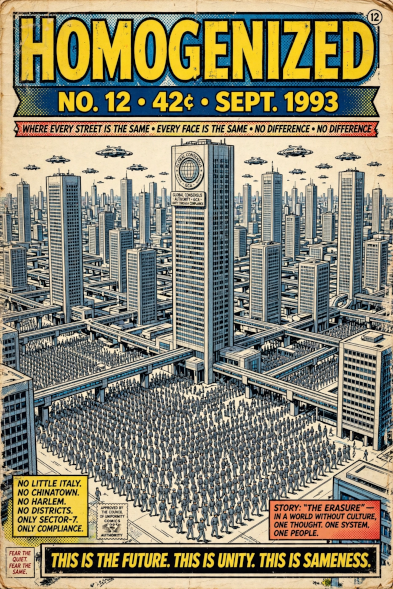
Ultimately, Culture Dilution in megacities is a complex phenomenon driven by the intersection of government policy and corporate interests, often prioritizing abstract concepts like economic growth and efficiency over the tangible, lived experience of cultural heritage. While globalization brings undeniable benefits it must not come at the cost of erasing the unique identities that make cities vibrant and human. Addressing this requires a concerted effort to champion and protect the unique cultural tapestry of our cities for future generations.
Want to learn more ?
About HeritageWatch
A non-profit organization dedicated to documenting and preserving cultural heritage in rapidly urbanizing areas around the world.
Contact Us
If you have any questions, concerns, or requests regarding Culture Dilution or our data practices, please contact us at:contact@cindyssystem.cloud
We will respond to your inquiry with 24 hours.